

Housing Is No Longer One-Size-Fits-All
Across Africa, people are rethinking how and where they live. Fixed, permanent structures no longer meet the realities of modern life. Families relocate, businesses move, communities expand, and opportunities shift.
This change has pushed modular and portable housing into the spotlight.
Instead of building once and staying forever, people now want homes and spaces that move with them, adapt to new needs, and remain valuable over time.
What Is Modular & Portable Housing?
Modular and portable housing refers to prefabricated units designed to be:
- Quickly assembled
- Easily transported
- Reused across multiple locations
- Adapted for different purposes
These structures are manufactured in controlled environments and installed on-site in a short time, reducing complexity and delays.
Why Portable Housing Is Trending in Africa
Mobility Matches Modern Lifestyles
People move for work, education, and business. Portable housing allows relocation without starting over.
Faster Access to Space
Instead of waiting months for construction, modular units provide immediate shelter or workspace.
Lower Entry Barriers
Portable housing reduces upfront costs associated with traditional construction, making it accessible to more people.
More Than Homes: Multi-Use Living Spaces
One of the biggest advantages of modular housing is versatility.
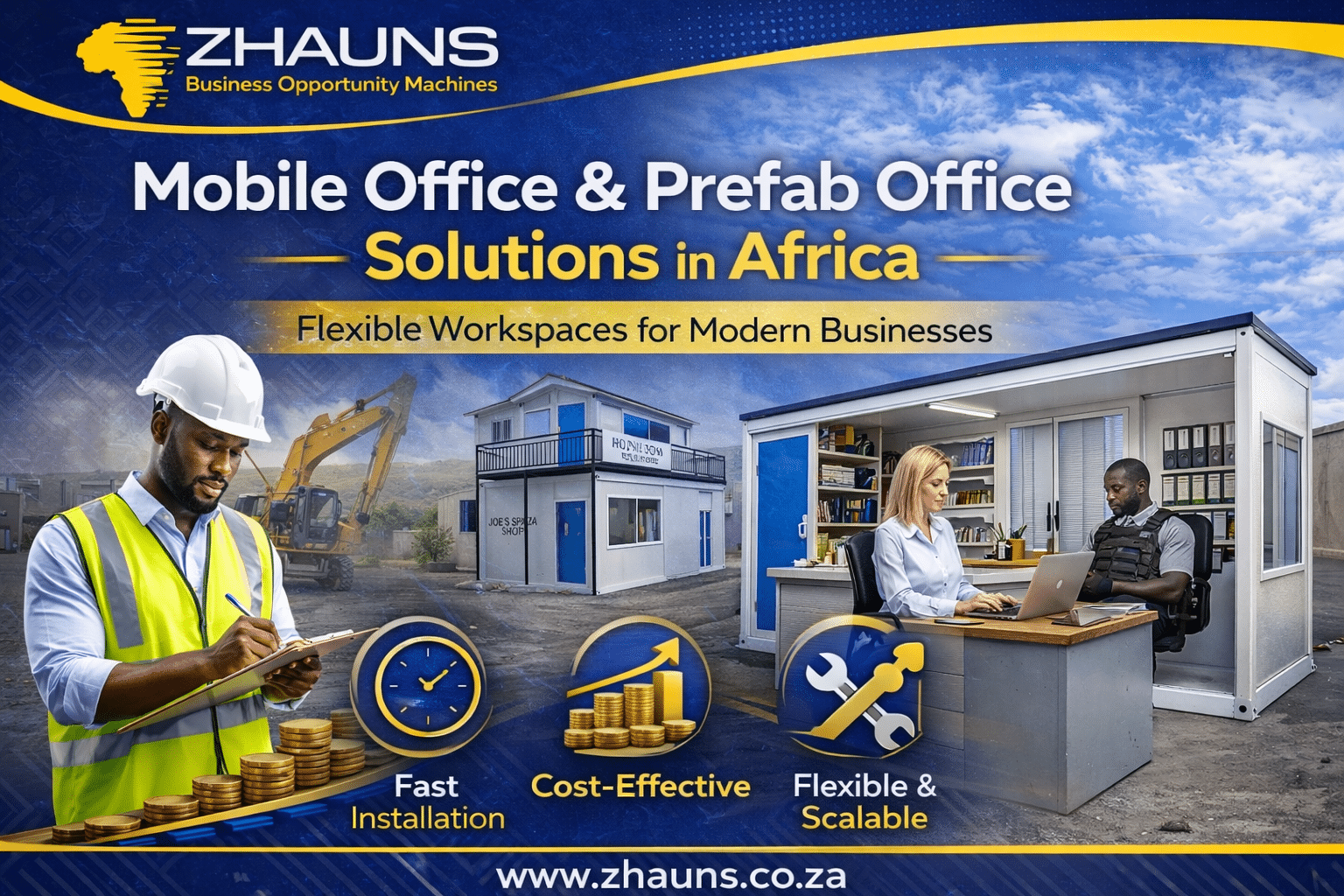
The same unit can be used as:
- A home
- A rental room
- A spaza shop
- A salon or barbershop
- A clinic
- A training centre
- A mobile office
This flexibility turns housing into an active asset.
Supporting Entrepreneurs & Small Businesses
Entrepreneurs often struggle to find affordable, flexible premises. Portable housing removes that barrier.
With modular units, business owners can:
- Start operations quickly
- Operate close to customers
- Relocate as demand changes
- Expand without rebuilding
This supports informal businesses transitioning into stable enterprises.
Designed for African Conditions
Portable housing must work in real environments. Modular units are designed to handle:
- Changing weather
- Urban and rural locations
- Limited infrastructure
- Temporary or long-term use
Durability and low maintenance ensure long-term usability.
Modular Housing & Community Development
Communities use modular housing for:
- Classrooms
- Clinics
- Community halls
- Training centres
- Emergency accommodation
Because units can be reused, communities get long-term value, not short-term fixes.
Why This Trend Will Continue
Modular and portable housing aligns perfectly with Africa’s realities:
- Growing populations
- Economic mobility
- Entrepreneurial cultures
- Space constraints
As flexibility becomes more important than permanence, portable housing will continue to grow in demand.
Modular and portable housing is no longer an alternative — it’s becoming the new standard.
By offering speed, flexibility, and long-term value, modular housing solutions empower families, entrepreneurs, and communities to adapt and grow.
Discover flexible housing solutions:
https://zhauns.co.za/zhauns-housing-solution/