


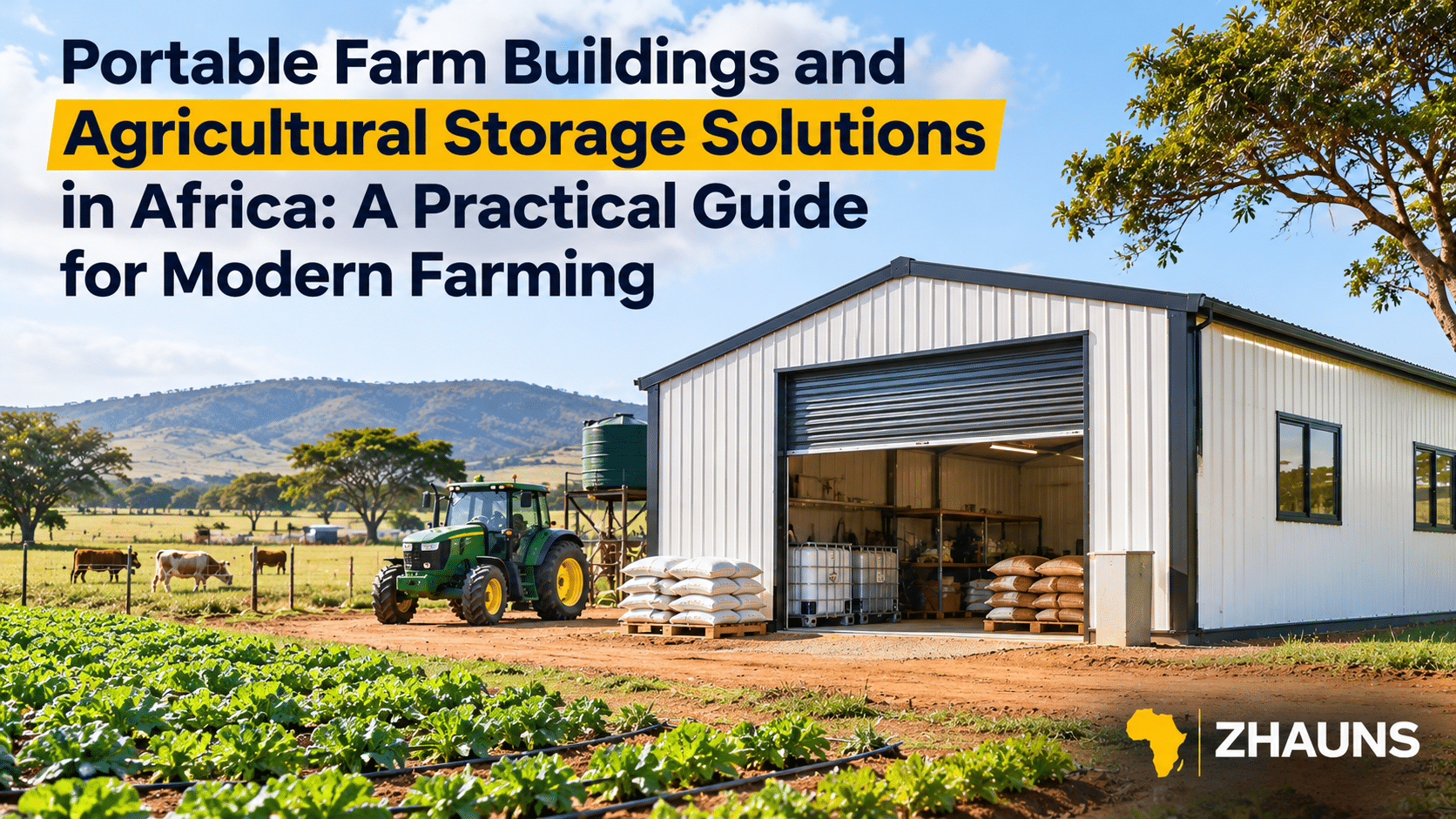
Agriculture plays an important role in economies and communities across Africa. From livestock farming and crop production to agricultural processing and equipment management, farms need reliable infrastructure to support everyday operations.
However, establishing permanent buildings in rural and remote locations can be challenging. Construction costs, labour availability, site accessibility and project timelines can all affect the development of essential farm facilities.
This is why farmers and agricultural businesses are increasingly exploring flexible infrastructure options such as portable farm buildings, prefabricated structures and practical agricultural storage solutions. The right building can help create organised working spaces, support farm operations and provide additional facilities as an agricultural business grows.
What Are Portable Farm Buildings?
Portable farm buildings are structures designed to provide usable space for different agricultural activities. Depending on their design and intended application, they may be considered for storage, administration, staff facilities and other farm-related requirements.
- Storage areas for tools and equipment
- Farm offices and administration spaces
- Staff accommodation
- Sheltered work areas
- Additional operational facilities
- Spaces for managing day-to-day farm activities
The requirements of a livestock farm may differ from those of a crop-producing business. Therefore, it is important to identify the purpose of a building before choosing a suitable structure.
Why Is Farm Infrastructure Important for Agricultural Businesses?
A farm requires more than land and machinery to operate efficiently. Suitable infrastructure helps farmers organise resources, manage activities and provide functional spaces for workers.
1. Better Organisation of Farm Operations
Dedicated spaces for administration, equipment and daily activities can help reduce clutter and improve the organisation of farm operations. A designated office can provide a space for managing supplier information, farm records, staff coordination and business administration.
2. Practical Storage Planning
Agricultural businesses often use tools, machinery accessories, maintenance equipment and other operational supplies. Having appropriate storage areas can make it easier to organise these resources. Storage requirements should be assessed according to the size, weight and nature of the items being stored.
3. Facilities for Farm Workers
Farms located away from towns may need additional facilities for staff. Depending on the workforce and location, accommodation may be an important consideration when planning farm infrastructure.
4. Flexibility for Growing Farms
Agricultural businesses can expand over time. Additional space may be needed as production increases, new equipment is purchased or more staff members join the operation. Flexible building solutions can help businesses consider their changing infrastructure requirements.
Types of Buildings Used in Agricultural Operations
Different agricultural activities require different types of buildings. The selection should be based on the operational needs of the farm. The examples below describe common farm infrastructure needs; confirm product suitability, specifications and availability directly with Zhauns.
Agricultural Storage Buildings
Agricultural storage buildings can provide designated spaces for equipment, tools, supplies and other farm-related materials. Before selecting a storage structure, consider its dimensions, ventilation, access requirements and the type of items that will be stored. For chemicals, fuel, fertilisers or other regulated materials, appropriate safety and storage standards must be followed.
Farm Offices
A farm office provides a dedicated place for administrative and management activities. It can be used for record keeping, planning, communication and coordination with suppliers or customers. A prefabricated office may be worth considering when a farm needs a workspace without undertaking a full conventional building project. Explore Zhauns’ Mobile Prefabricated Offices for more information about its existing office solution.
Farm Worker Accommodation
Some agricultural businesses operate in locations where workers travel long distances to reach the farm. Suitable accommodation facilities may form part of the farm’s infrastructure planning. The required layout will depend on the number of occupants, privacy requirements, access to utilities and applicable local regulations. Zhauns’ Mobile Homes and Accommodation page provides information about its prefabricated accommodation structures.
Sheltered Work Areas
Farms may also need covered spaces for maintenance activities, equipment preparation and general operational tasks. The design should account for the work being carried out, weather exposure and safety requirements. Not every prefabricated building is suitable for every agricultural use, so specifications should be confirmed before purchase.
Benefits of Prefabricated Buildings for Farms Explore the wider range of existing structures in the Zhauns Housing Solution page.
Prefabricated buildings are manufactured using components prepared before installation. This approach can reduce the amount of construction work required at the final location.
Faster Installation
Since components are prepared in advance, certain prefabricated structures can be installed more quickly than conventional buildings. This can be useful when a farm needs additional space within a limited period.
Flexible Placement
A portable structure can offer more flexibility when planning facilities across a farm. However, transport access, ground conditions and installation requirements must be considered.
Practical Design
Prefabricated buildings can be designed for specific purposes, such as offices or accommodation. Selecting a structure based on its intended use helps ensure that the layout supports daily activities.
Lower Construction Complexity
Some prefabricated solutions require less on-site construction work. This may simplify the setup process, although the total cost will still depend on transport, ground preparation, installation and optional requirements.
How to Choose the Right Agricultural Building
Choosing an agricultural building requires careful planning. The following factors can help farmers and agricultural businesses make an informed decision.
Identify the Main Purpose
Determine whether the building is needed for storage, administration, accommodation or another farm activity. The intended use will influence the required layout and specifications.
Consider the Farm Location
Rural farms may have limited road access or challenging ground conditions. Assess the delivery route and available installation space before selecting a structure.
Evaluate Weather Conditions
Agricultural buildings may be exposed to heat, rain, wind and changing seasonal conditions. Consider insulation, material quality, drainage and maintenance requirements.
Plan for Future Requirements
Think about possible changes in farm operations. A growing business may need more office space, additional accommodation or separate operational facilities in the future.
Check Safety and Compliance
Building regulations, municipal requirements, fire safety and occupational health and safety obligations may apply. Requirements can vary according to the structure, location and intended use. Confirm these details with the relevant authorities and qualified professionals.
Can Prefabricated Accommodation Support Rural Agricultural Projects?
Suitable prefabricated accommodation can be considered for agricultural projects where workers need living facilities near the farm. A practical accommodation solution should account for the number of occupants, sleeping arrangements, ventilation, insulation, bathroom facilities and access to utilities.
Zhauns offers prefabricated homes and accommodation structures with features such as insulated panels, a durable frame and transport-friendly designs. Some configurations include a kitchenette and bathroom, while layout adjustments may be available depending on the model. Explore the existing Zhauns Housing Solution to learn more about its prefabricated structures.
Important Considerations Before Installing a Farm Building
- Land preparation: Ensure that the selected location has suitable, level and stable ground.
- Building purpose: Confirm whether the structure is intended for storage, office work or accommodation.
- Dimensions: Check that the building provides enough usable space.
- Weather protection: Review the materials and insulation according to local climate conditions.
- Transport access: Confirm that delivery vehicles can reach the farm and installation area.
- Utilities: Plan for electricity, water, plumbing and sewerage where required.
- Regulations: Check local planning, building and safety requirements before installation.
Good planning helps agricultural businesses avoid unsuitable purchases and unexpected installation challenges.
Why Consider Zhauns for Prefabricated Agricultural Support Facilities?
Zhauns provides prefabricated building solutions for different business and infrastructure requirements. Its existing range includes mobile prefabricated offices, homes and accommodation structures. These solutions may be relevant to agricultural businesses looking for administrative workspaces or accommodation facilities. The suitability of each structure depends on the farm’s intended use and specific requirements.
To explore the available options, visit the Zhauns Housing Solution page or learn more about Mobile Homes and Accommodation. For farm administration requirements, the Mobile Prefabricated Offices page provides further details about Zhauns’ office structures.
Frequently Asked Questions
What are portable farm buildings used for?
Portable farm buildings can be considered for different agricultural requirements, including storage, administration, staff facilities and other operational uses. The selected structure must be suitable for its intended application.
Are prefabricated buildings suitable for rural farms?
They can be suitable for rural locations where transport access, ground preparation and installation requirements can be met. Each site should be assessed before ordering.
Can a prefabricated building be used as farm worker accommodation?
A suitable accommodation model can be considered for farm workers. Businesses should check the available layout, occupancy requirements, utilities and relevant regulations.
What should farmers consider before buying an agricultural storage building?
Farmers should assess the items being stored, building dimensions, access, ventilation, weather exposure, security and applicable safety standards.
Can farm infrastructure be expanded as the business grows?
Additional facilities may be considered as operational requirements change. The feasibility of expansion depends on the available land, structure design, site conditions and local regulations.
Planning the Right Agricultural Infrastructure
Reliable infrastructure is an important part of running an organised agricultural business. From storage and administration to staff accommodation, farms need practical spaces that support everyday operations. Portable farm buildings and prefabricated structures can offer flexible options for agricultural businesses across Africa, particularly where conventional construction is difficult or additional facilities are needed.
Before choosing a solution, assess the farm’s location, intended use, installation requirements and future needs. Explore Zhauns’ existing prefabricated building solutions, mobile accommodation structures and prefabricated offices to identify options that may support your agricultural operations.