


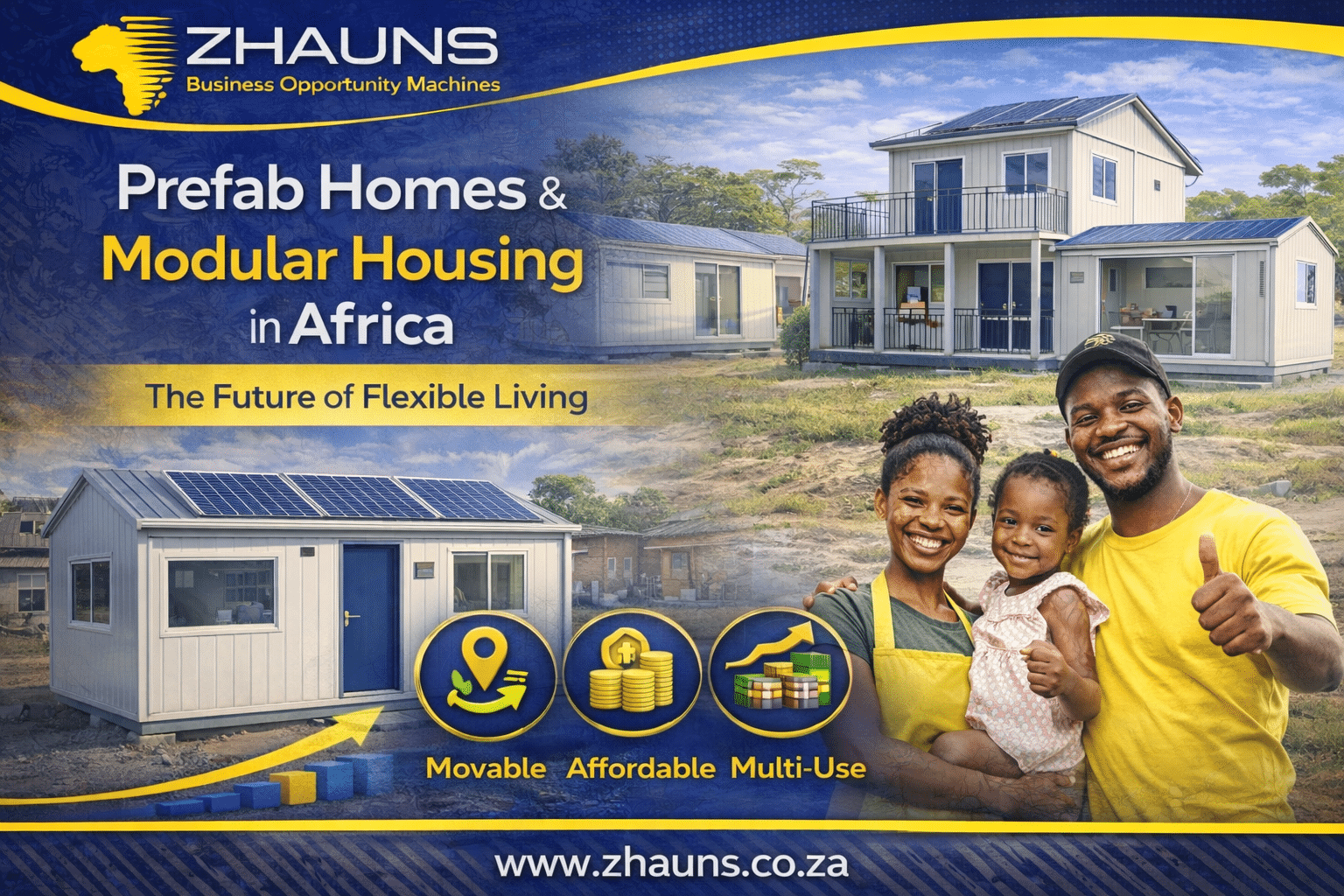
Across Africa, the concept of housing is changing.
For decades, owning a home meant building a permanent structure — a process that required time, money, land, and long-term commitment. But today, lifestyles are more dynamic than ever.
People relocate for work. Entrepreneurs move closer to opportunities. Families expand. Communities evolve.
In this rapidly changing environment, traditional housing is no longer always practical.
This is why prefab homes and modular housing solutions are becoming the preferred choice across Africa.
Instead of building once and staying in one place forever, people are now choosing homes that are flexible, affordable, and adaptable.
With innovative solutions from Zhauns, modular housing is no longer an alternative — it is becoming the new standard.
Why Traditional Housing Is No Longer Enough
Building a traditional home in Africa often comes with several challenges:
- High construction costs
- Long timelines
- Limited flexibility
- Difficult approvals and permits
- Inability to relocate
For many people, this creates barriers to owning or using space efficiently.
At the same time, economic conditions are changing.
People need:
- Faster housing solutions
- Affordable entry points
- Multi-purpose spaces
- Mobility and flexibility
This shift has created strong demand for prefabricated and portable housing.
What Is Prefab & Modular Housing?
Prefab (prefabricated) housing refers to structures that are built off-site and then transported to the final location for installation.
Modular housing takes this a step further by allowing multiple units to be combined, expanded, or reconfigured.
These structures are designed to be:
- Quick to install
- Easy to transport
- Customisable
- Reusable
- Scalable
individuals and businesses can set up functional spaces within days instead of months.
Why Modular Housing Is Growing Across Africa
Prefab homes are gaining popularity because they align perfectly with modern African realities.
- Mobility Matches Modern Lifestyles
Today, people move more frequently than ever before.
- Job opportunities change
- Business locations shift
- Cities expand
A fixed house cannot adapt easily.
But a modular home can be:
👉 Relocated
👉 Reinstalled
👉 Reused
This gives homeowners and entrepreneurs complete flexibility.
- Faster Access to Living Space
Traditional construction can take months — sometimes years.
Prefab housing provides:
- Immediate shelter
- Quick installation
- Minimal delays
This is especially important in:
- Urban expansion areas
- Rural development zones
- Emergency housing situations
- Lower Entry Costs
Building a traditional home requires significant capital.
Prefab housing reduces:
- Construction costs
- Labour expenses
- Material wastage
This makes housing accessible to more people — especially first-time homeowners and entrepreneurs.
- Multi-Purpose Use
One of the biggest advantages of modular housing is versatility.
A single unit can be used as:
- A home
- A rental unit
- A spaza shop
- A salon or barbershop
- A mobile office
- A clinic or training space
This transforms housing from a fixed expense into a productive asset.
From Living Space to Business Opportunity
Across Africa, housing is no longer just about shelter — it is becoming a platform for economic activity.
Entrepreneurs are using modular housing to:
- Start retail businesses
- Offer services
- Run small-scale production
For example, a homeowner may convert part of their unit into a spaza shop, supported by solutions like:
👉 https://zhauns.co.za/zhauns-housing-solution/
They can also integrate production using machines from: Zhauns Machine
This combination creates:
- Multiple income streams
- Higher profitability
- Local job creation
Supporting Small Businesses and Entrepreneurs
One of the biggest barriers for entrepreneurs is access to affordable space.
Traditional rentals often require:
- Deposits
- Long-term contracts
- High monthly costs
Prefab housing removes these barriers.
With modular units, entrepreneurs can:
- Start businesses from home
- Operate close to customers
- Relocate if needed
- Expand gradually
Zhauns also supports business growth through: Buisness Academy
This ensures that entrepreneurs are not just given infrastructure — but also the knowledge to succeed.
Designed for African Conditions
Housing solutions in Africa must handle challenging environments such as:
- Extreme heat
- Heavy rainfall
- Dust and wind
- Remote locations
Prefab homes from Zhauns are designed with durability in mind.
This ensures:
- Long-lasting structures
- Low maintenance costs
- Reliable performance
Modular Housing in Community Development
Modular housing is not only used by individuals — it is also transforming communities.
Across Africa, these structures are used for:
- Classrooms
- Clinics
- Community centres
- Training facilities
- Emergency housing
Because units can be reused and relocated, they provide long-term value instead of temporary solutions.
Real-Life Example of Modular Housing Impact
In a growing township, a family invested in a modular housing unit.
Initially, it was used as a home.
Later:
- A small shop was added
- A rental room was created
- Additional income streams were generated
Within a few years, the same structure supported both living and business needs.
This shows how modular housing can evolve with the user.
How to Get Started with Prefab Housing
If you are considering modular housing, here are key factors to evaluate:
- Size of the unit
- Intended use (home, business, or both)
- Location requirements
- Utility connections (water, electricity)
- Future expansion plans
Choosing adaptable solutions from Zhauns ensures that your investment grows with your needs.
Why Prefab Housing Is the Future in Africa
Prefab and modular housing align perfectly with Africa’s future:
- Growing population
- Rapid urbanisation
- Entrepreneurial culture
- Need for flexible infrastructure